Why the sphere is segmented
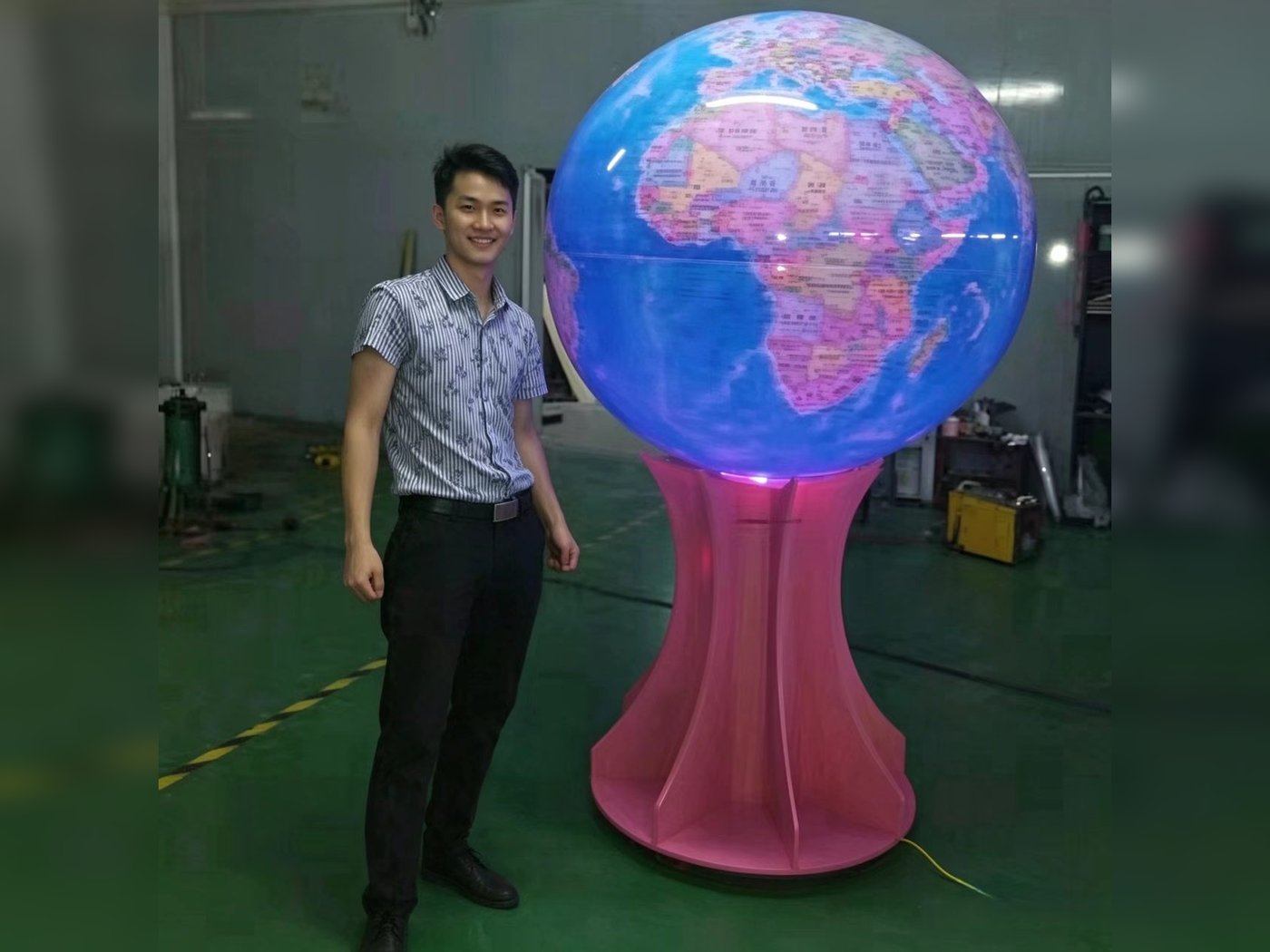
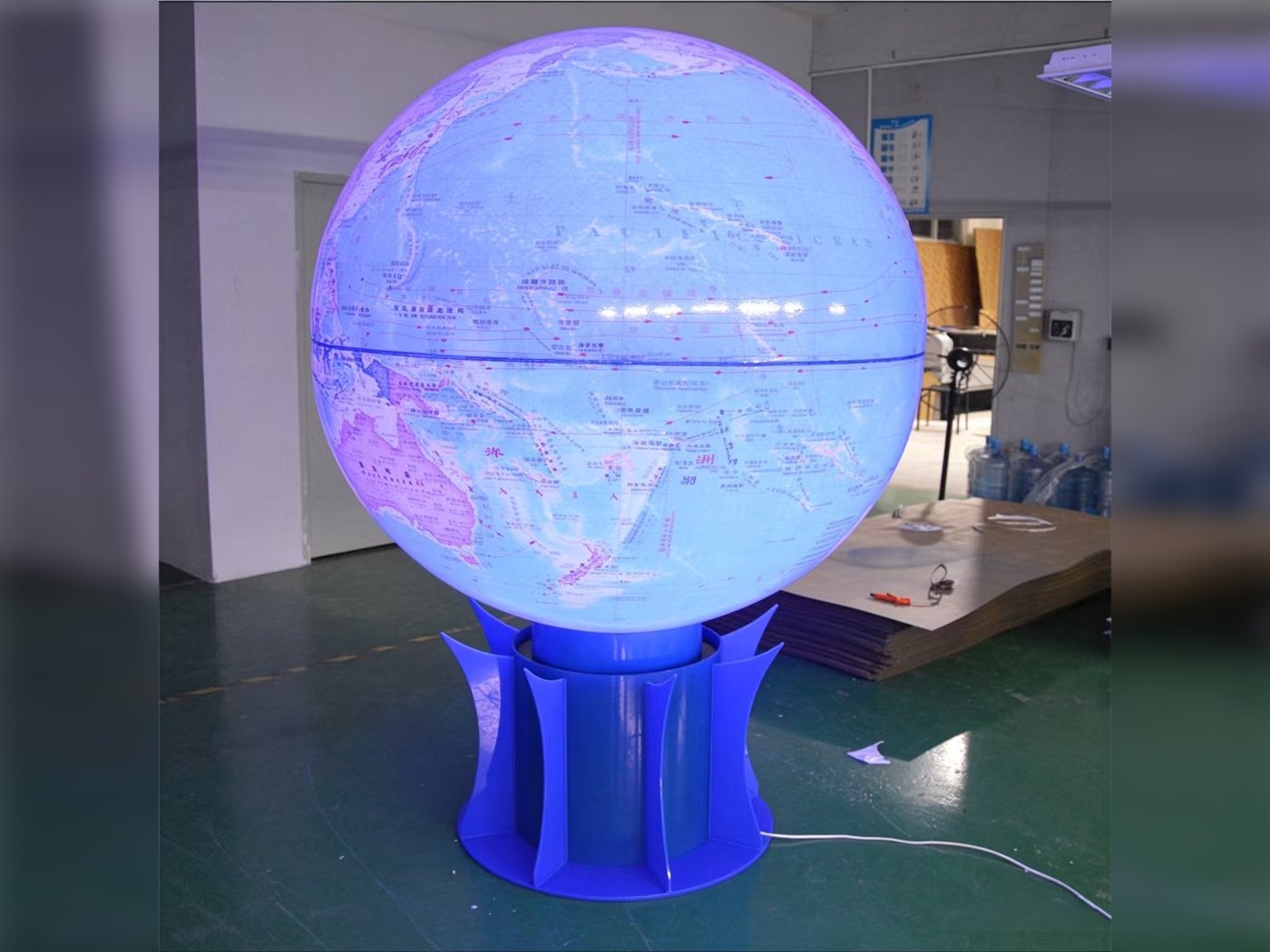
Above roughly 400 mm a globe cannot be formed in one piece, so it is built from gores or matched caps that are bonded along a true spherical line. The seam is then shaved and diamond-polished until the map print crosses it without a visible break. We build the equator joint deliberately: it is where the two hemispheres meet, and on a printed globe it reads as a latitude line rather than a defect.
Each globe is assembled on a rotating jig with the shell supported at four points, so the bond line does not carry the weight of the panel while the adhesive cures. That is the difference between a globe that stays round for a decade and one that shows a flat band within a year.
Printing the map so it survives the light
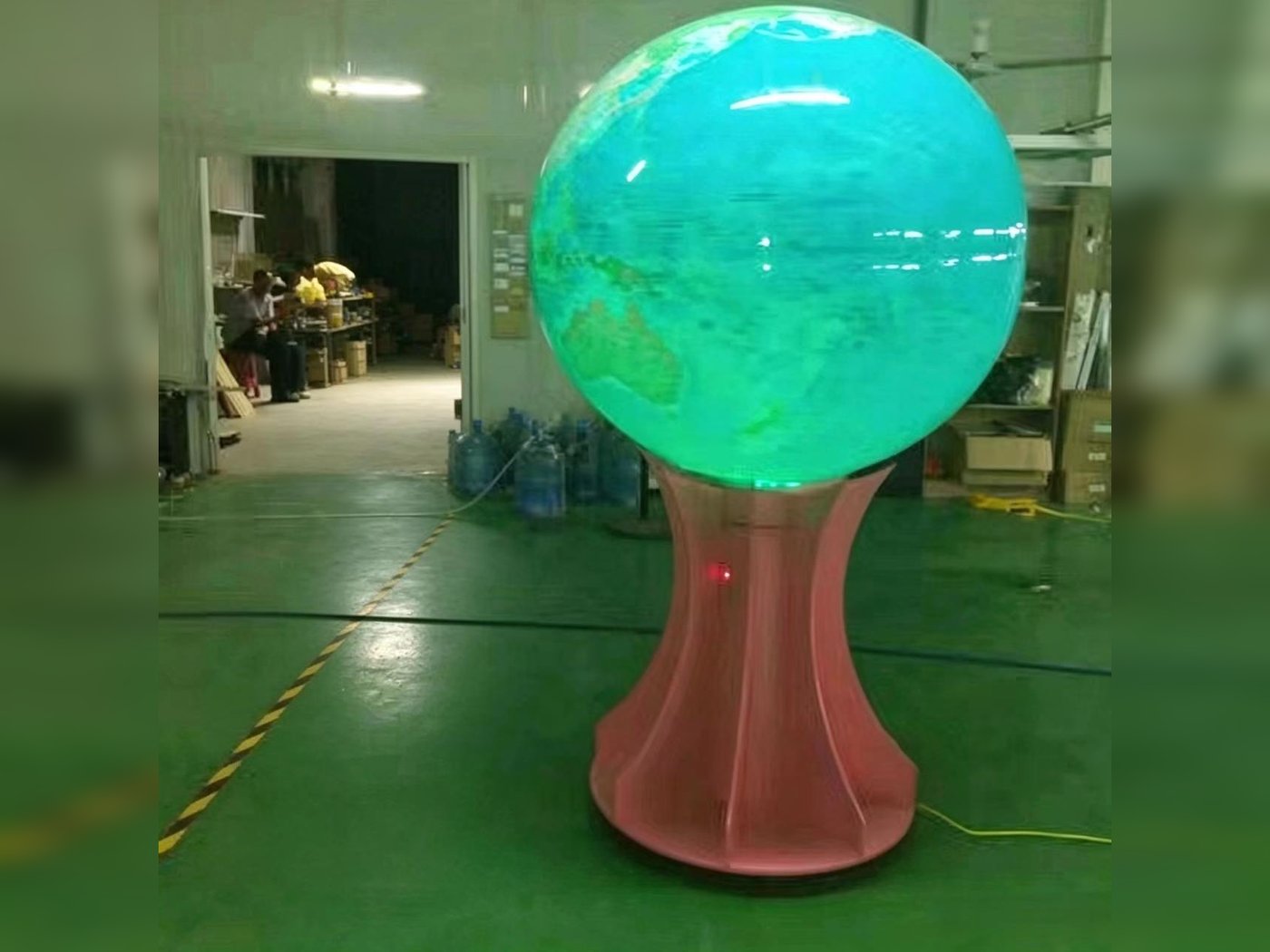
The map is reverse-printed onto the inner face and then backed with a diffusing layer, which protects the ink from cleaning agents and keeps the surface scratch-free. You can supply a vector map, a corporate cartography style, or ask us to print a single continent or a custom territory. Colour is matched against a physical proof, because a printed globe is judged on its blues and greens more than on anything else.
Lighting and pedestal
- Internal LED ring at the base of the sphere, angled to light the poles as well as the equator.
- Warm white (3000 K), neutral (4000 K) or RGB with remote or DMX control.
- Cast-acrylic pedestal in clear, tinted or frosted finish, machined to sit flat on uneven floors.
- Optional internal rotating motor for slow-spin display versions.
- CE / UL-compatible driver matched to your destination voltage.
Shipping a printed globe
Globes ship in a foam-cradled crate with the shell supported away from every seam, and the pedestal packed separately to avoid point-loading the sphere in transit. Up to 1.2 m a single carton with EPE corner cradles is enough; above that we use a plywood crate with a rigging diagram. Sea freight is standard; air is possible for samples.