What the coating actually does
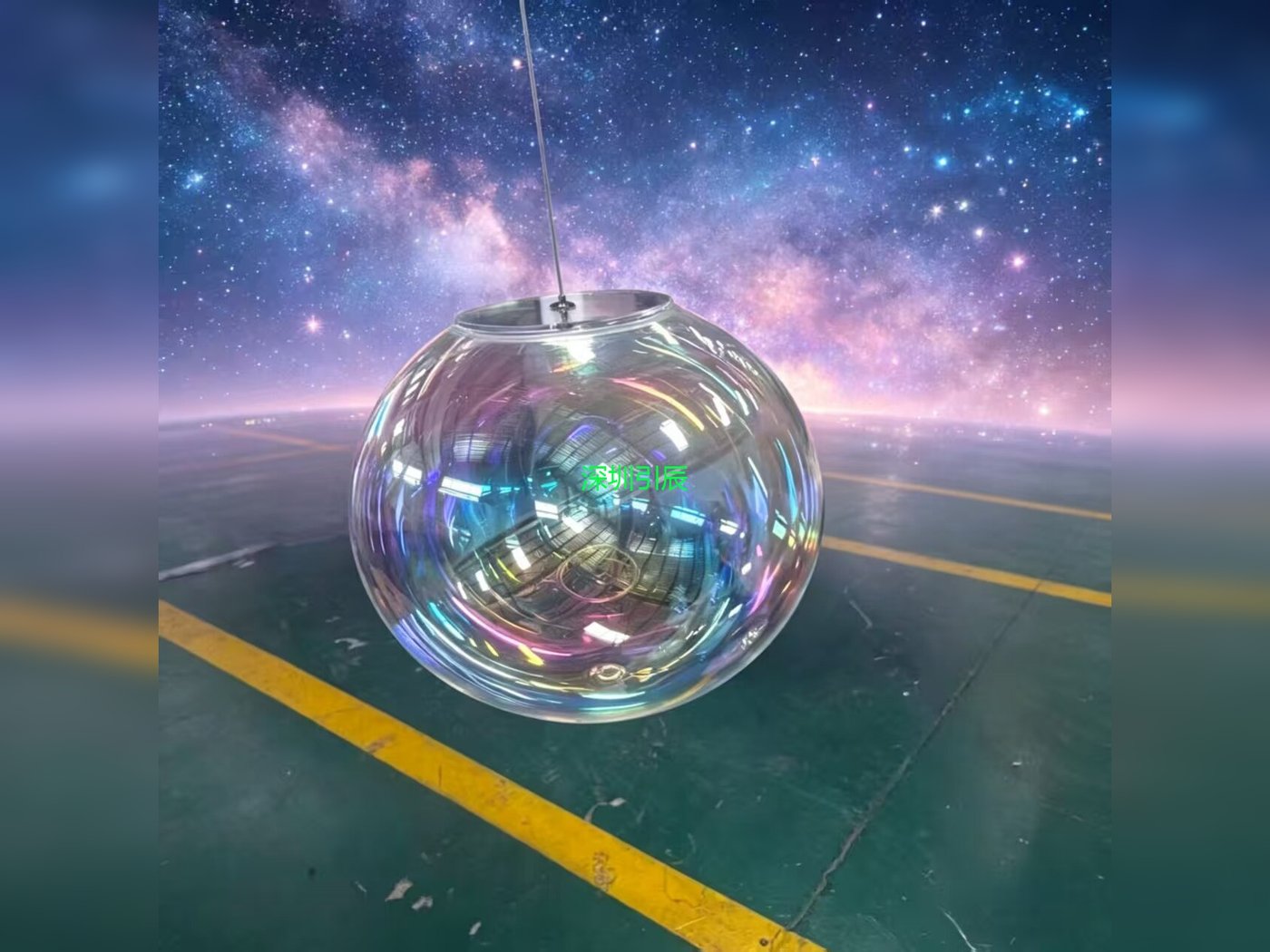
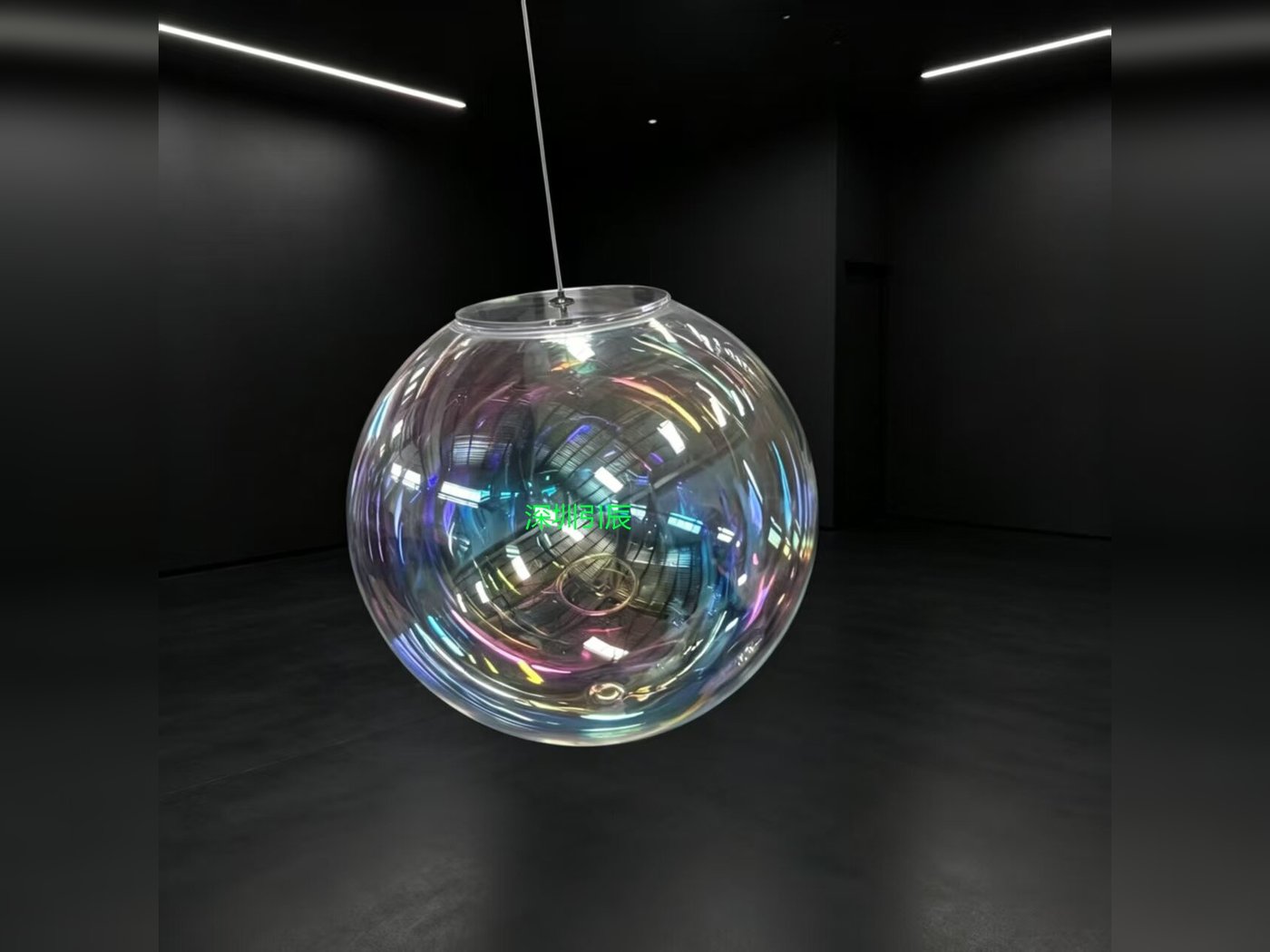
A dichroic coating is a stack of alternating optical layers. Light that passes through is tinted one colour; light that reflects off the surface is tinted its complement. On a sphere that means the transmission colour and the reflection colour sit side by side on the same object, and both move as the viewing angle changes. That is why a coated sphere never looks the same in two photographs.
The coating is applied to the outside of a polished cast-acrylic sphere and then sealed. We control the layer stack to hit a specified colour pair, for example magenta-to-cyan or gold-to-green, and we send a coated flat swatch for approval before the sphere is processed, because the same stack reads differently on a curved surface than on a panel.
Sizes, mounting and light
- 150 mm and 200 mm spheres for table clusters and window displays.
- 300 mm and 400 mm for hanging installations and retail ceilings.
- 500 mm and 600 mm for atrium features, usually hung on a steel cable with a machined collar.
- Clear, smoke-tinted or frosted body underneath the coating for a softer colour shift.
- Optional internal LED puck so the sphere glows as well as reflecting; the coating and the light are specified together so the colour does not go muddy.
Where they are used, and where they fail
Most of our volume goes to interiors: hotel lobbies, restaurant ceilings, retail windows, exhibition stands and seasonal installations. The failure mode is always the same — a sphere hung on a nylon line in a space with strong downlights, where the coating picks up the lamp colour and the intended shift disappears. We specify the light source with the installation, or supply the LED puck so the sphere carries its own colour.